veeflY AI
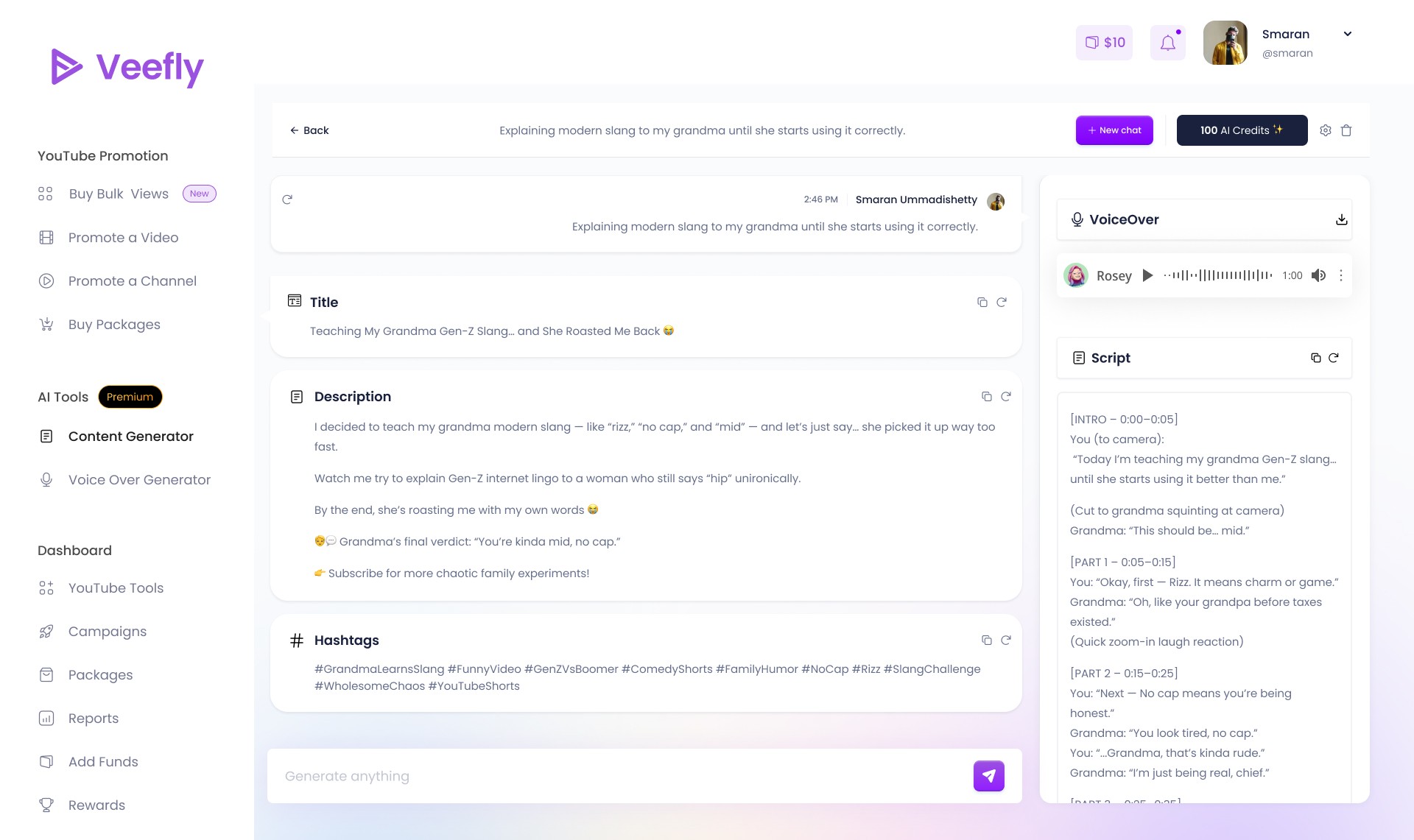
Creators struggled with time-consuming story development and fragmented production workflows. I led the UX/UI design of a conversational AI system that turns a simple idea into a structured script, voiceover, and SEO-ready metadata in minutes. The unified experience reduced video production time by 68% while improving storytelling efficiency and publishing velocity.
Client
VEEFLY
Year
2024
My Role
UX Design
Category
Genai
Overview
Marketing teams and creator-led businesses were spending 4–6 hours per video coordinating scripting, voiceovers, and SEO optimization across multiple tools. This fragmented workflow led to inconsistent brand storytelling, slower campaign launches, higher production costs, and limited content scalability.
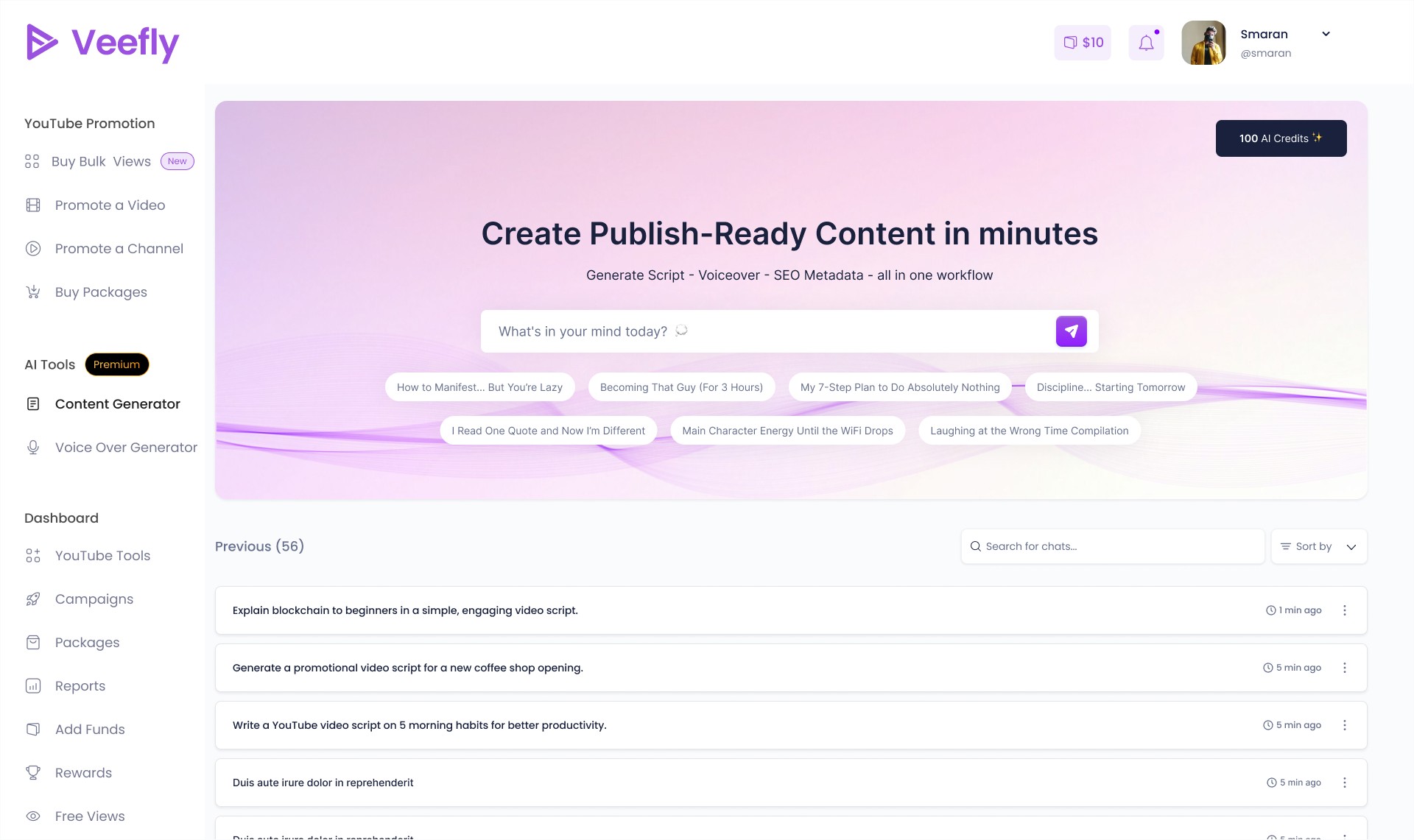
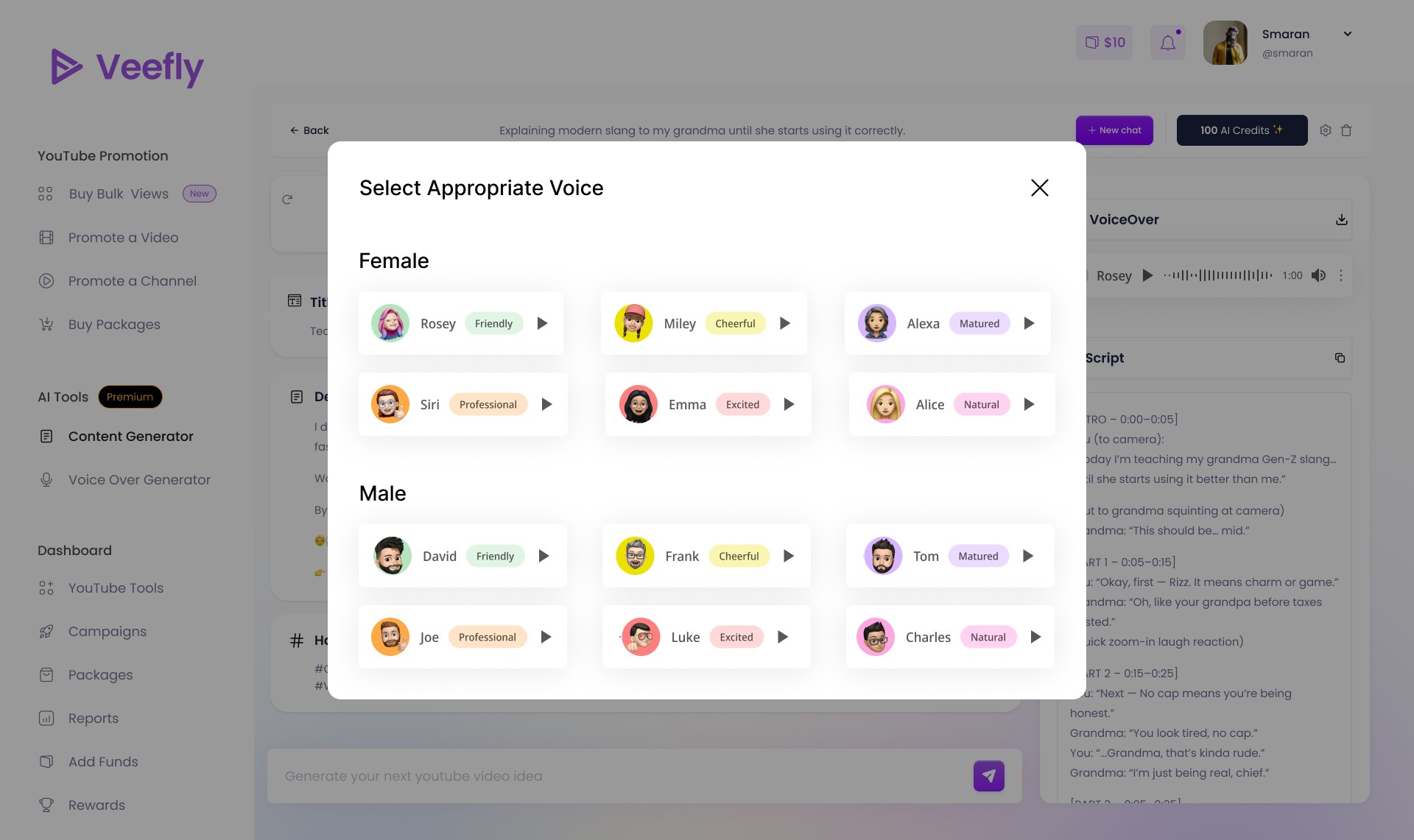
VeeFly AI was designed as a conversational AI-powered content engine that transforms a raw campaign idea into a structured, brand-aligned, publish-ready video package within minutes. Through a unified chat interface, teams can generate long-form scripts, refine narrative structures, create AI voiceovers, and produce SEO-optimized metadata—reducing tool dependency while maintaining messaging consistency across content pipelines.
The result was a measurable operational impact: 68% reduction in production time, 2x increase in content output, 34% lower content turnaround costs, and improved narrative consistency across campaigns. VeeFly AI repositioned video creation from a manual creative effort into a scalable, AI-driven content infrastructure for growth-focused teams.
What was the problem?
Users on VeeFly’s platform struggled to turn raw ideas into well-structured, story-driven YouTube content. Creating scripts, voiceovers, and SEO metadata required multiple tools and manual effort.
This fragmented process led to creative fatigue, inconsistent quality, longer production time, and lower publishing frequency.
How did I discover the problem?
Discovery research with 38 creators and 6 small marketing teams revealed that producing a single YouTube video required 4–6 hours, with scripting and story structuring consuming nearly 50% of total effort.
Users reported switching between 3–5 disconnected tools for scripting, voice generation, and SEO research, leading to workflow fragmentation and increased cognitive load.
In validation surveys (n=64), 69% of creators said existing AI tools generated generic outputs that required heavy manual refinement to match tone, hooks, and platform-specific storytelling formats.
74% expressed a need for a YouTube-specific AI workflow that could guide narrative structure instead of just generating raw text.
Competitive benchmarking showed that most solutions addressed isolated tasks (script or voice or metadata), with no unified system delivering an end-to-end, guided storytelling experience.

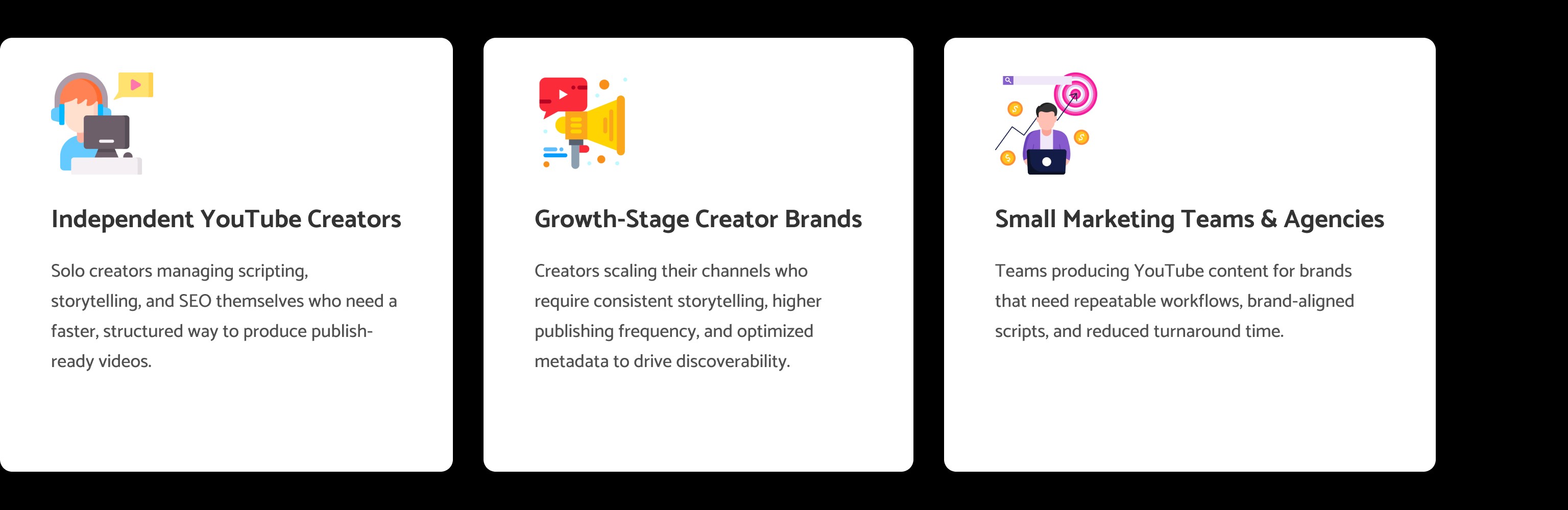
Whom am I solving this for?
Design Approach
Conclusion
VeeFly AI transformed YouTube content creation from a fragmented, time-intensive process into a unified, AI-powered storytelling engine. By bringing scripting, narrative structuring, voice generation, and metadata optimization into a single conversational workflow, we eliminated tool-switching friction and enabled creators to move from idea to publish-ready content in minutes.
The impact was measurable: a 68% reduction in end-to-end production time, a 2x increase in publishing frequency, a 41% improvement in script completion and narrative coherence, and a 34% reduction in content turnaround costs for teams. VeeFly AI shifted content creation from manual effort to scalable, AI-augmented storytelling—empowering creators and marketing teams to produce faster, more consistently, and at scale.
©2026 smaran.studio
GO BACK TO TOP 🆙